
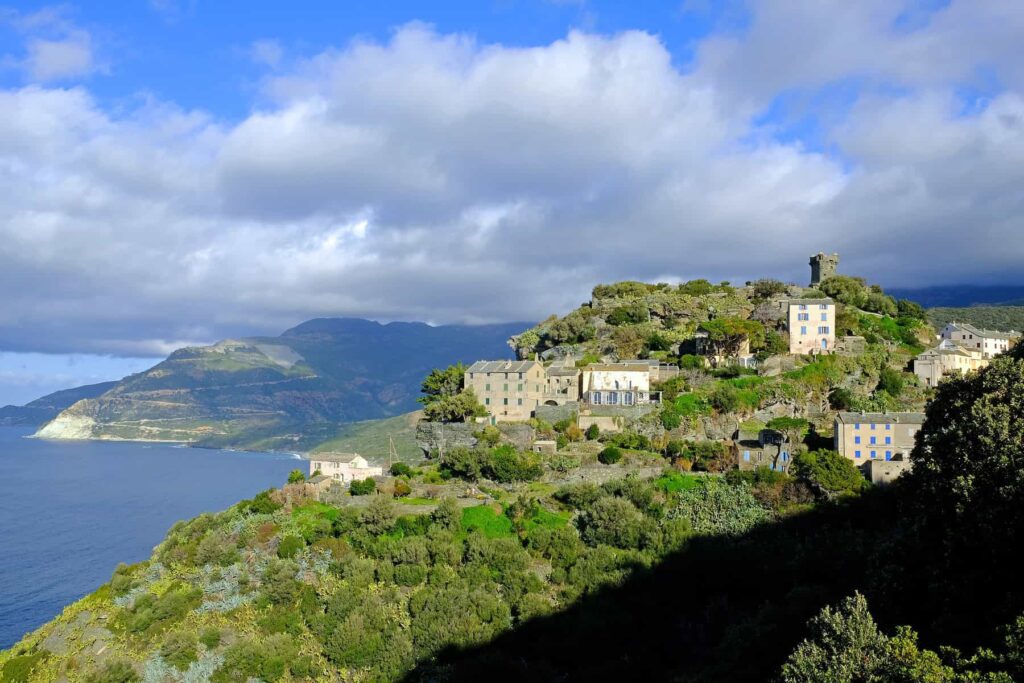
Perched on a ridge above the west coast of Cap Corse, Nonza is not a place you simply pass through. With its vast dark pebble beach, steep cliffs, and open views over the sea, it feels quite unlike the rest of Corsica.
At first glance, the village may seem stark, but stay a little longer, and its magnetic character begins to emerge. Shaped by centuries of invasions, local traditions, and a life lived on the island’s edge, Nonza keeps a quiet, resilient spirit. Many visitors stop briefly to admire the black beach from above, but the real appeal is in wandering its narrow, stone-paved streets, taking the time to look around. Read on to discover what makes this place so compelling.
This page contains affiliate links meaning I get a commission if you decide to make a purchase through my links, at no extra cost to you. Click here to learn more.
LOCATION & GETTING THERE
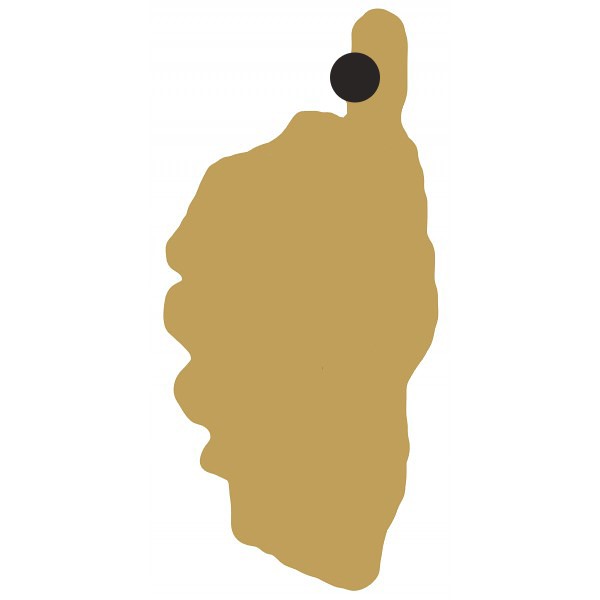
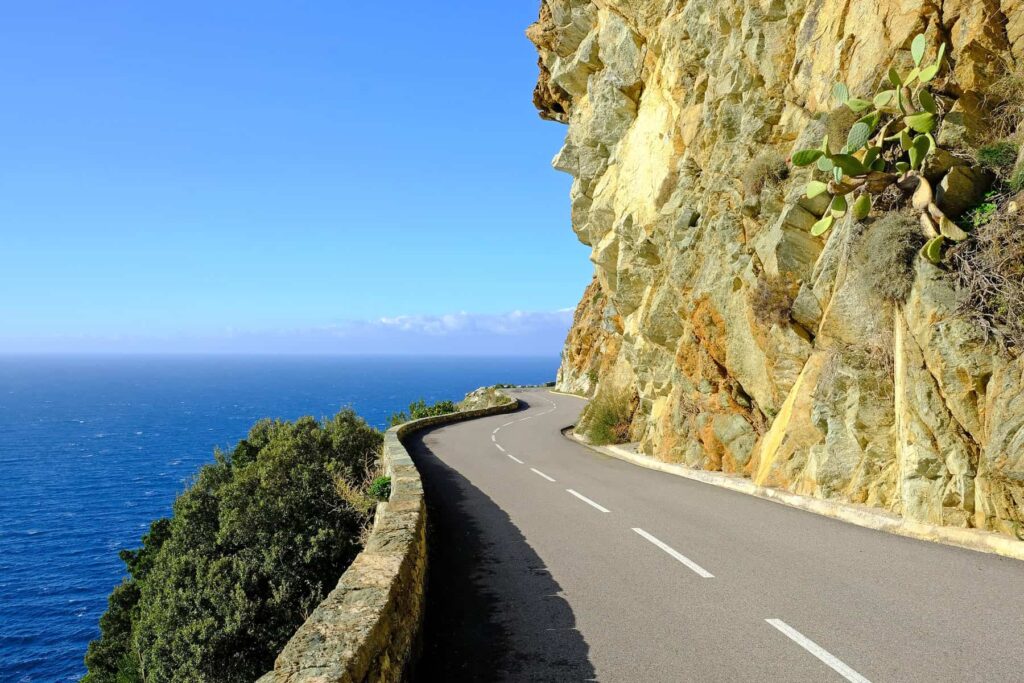
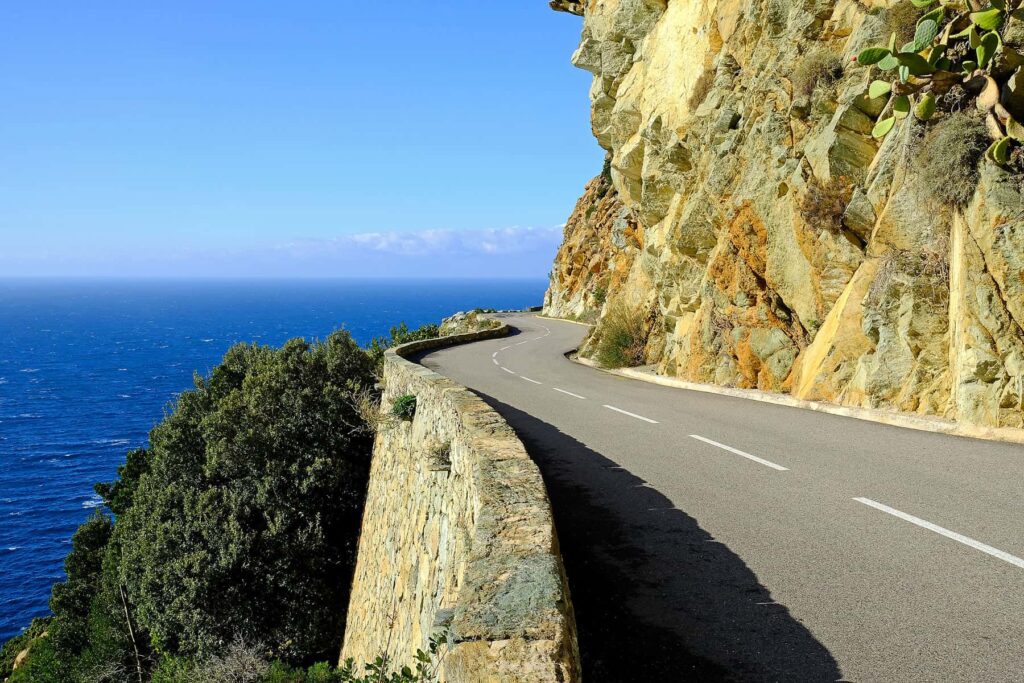
Nonza is located on Cap Corse’s west coast, about 20 km north of Saint‑Florent. Set atop cliffs that rise 100 meters above the sea, it offers mesmerising views of unspoiled Mediterranean scenery. The best way to reach it is on the iconic 120‑kilometre D80 road that circles the Cap Corse peninsula. Narrow and winding, the route is much loved by motorcyclists and cyclists, who relish the exhilarating ride high above the water. If you start in Bastia and drive counter‑clockwise, you’ll enjoy direct views of the shoreline and can catch an unforgettable sunset over Nonza.
If you prefer to skip the Cap Corse scenic drive, take the route via Col de Teghime, Patrimonio and Farinole- you’ll arrive in Nonza in under one hour. Given the village’s setting, parking can be tricky to find during the busy peak season in Corsica.
BOOK A WALKING TOUR OF BASTIA
Explore Bastia with a local guide on a 2-4-hour private walking tour. Learn the town’s history and visit iconic places. The journey can be customised according to your preferences.
BEST TIME TO VISIT
Although Nonza is magical year-round, its character changes each season. In summer, the village turns into a lively spot, popular with both tourists and locals. Days are long, restaurants and cafés stay open, and you can easily turn a quick stop into a longer visit. Its southern exposure brings beautiful sunsets, though August evenings can feel very warm when the air is still.
When winter comes, and the crowds fade, Nonza takes on a solitary, remote feel. The village is often battered by wind and waves, and the raw power of nature is on full display. This is the perfect time to walk along the black beach, taking in Cap Corse’s rugged beauty.
No matter the season, the most enchanting moment is in the evening. As the sun drops toward the horizon, it creates a spectacle of golden light spilling over the sea- offering a moment of pure contemplation in the heart of nature’s drama.
BOOK A CATAMARAN TOUR OF THE NORTHERN COAST
Enjoy a luxury catamaran trip from Saint Florent, an extraordinary sea adventure touring the sublime Agriates coast. Snorkel turquoise sea waters and sunbathe, sipping delicious cocktails from the bar. Choose a day trip or a half-day excursion.
WHERE TO STAY
- Casa Maria (€)
- Hotel Saint Roch (€)
- Residence I Fioretti (€)
- Residence Arinella (€)
- L’Auberge du Chat qui Pêche (€)
- Hotel U San Daniellu (€€)
CAP CORSE HOTELS MAP SEARCH
HISTORY
- Despite Nonza’s legal status dating back to 1109, the site was already occupied in prehistoric times. Rock paintings in Grotta Scritta point to human presence in the 2nd millennium BC.
- In antiquity, the village stood on the site of the Roman camp Castrum Nuntiae, whose Latin name means ‘announcer’, reflecting its role as a lookout outpost announcing invasions.
- At the end of the Roman era, during early Christianity, St Julia, patron saint of Corsica, is said to have been martyred here. The first sanctuary dedicated to her was destroyed by Barbary pirates in 734.
- The village’s existence is first documented in the Middle Ages, with Nonza-Olmeta held by the Avogari, and later Avogari‑Gentile families as part of a larger Cap Corse fiefdom.
- From the 13th century, Genoa gradually took control of Cap Corse, suppressing local lordships. Nonza was one of the few remaining castles kept to protect the Cape’s maritime trade.
- Barbary raids of the 15th and 16th centuries led to the coast’s depopulation and the construction of Genoese coastal towers under parish contributions.
- Lacking arable land, Nonza’s farmers worked in the Agriates and Ostriconi regions, exchanging cereals for products such as oil, wine, and grapes from Sardinia, Tuscany or Liguria.
- In the 18th century, Nonza joined Pascal Paoli’s revolt, and during the French conquest of Corsica, it became a key strategic point in the campaign to take Cap Corse. In 1764, the village was bombarded, while the Paoline tower became famous for the lone defender legend.
- The 19th century saw intensive cultivation of citron (cédrat de Corse) in the region, with fruit sent to wholesalers in Livorno, Marseille, and Nice.
- At this time, many inhabitants emigrated to the mainland and the Americas (particularly Puerto Rico and Saint-Domingue) to escape hardship and unemployment.
- In the second part of the 19th century, the construction of the coastal D80 road around Cap Corse shifted trade to the port of Bastia.
- Today, tourism is the mainstay of Nonza’s economy, although the village itself has fewer than 100 permanent, year‑round residents.
BOOK YOUR ACTIVITY
NONZA VILLAGE
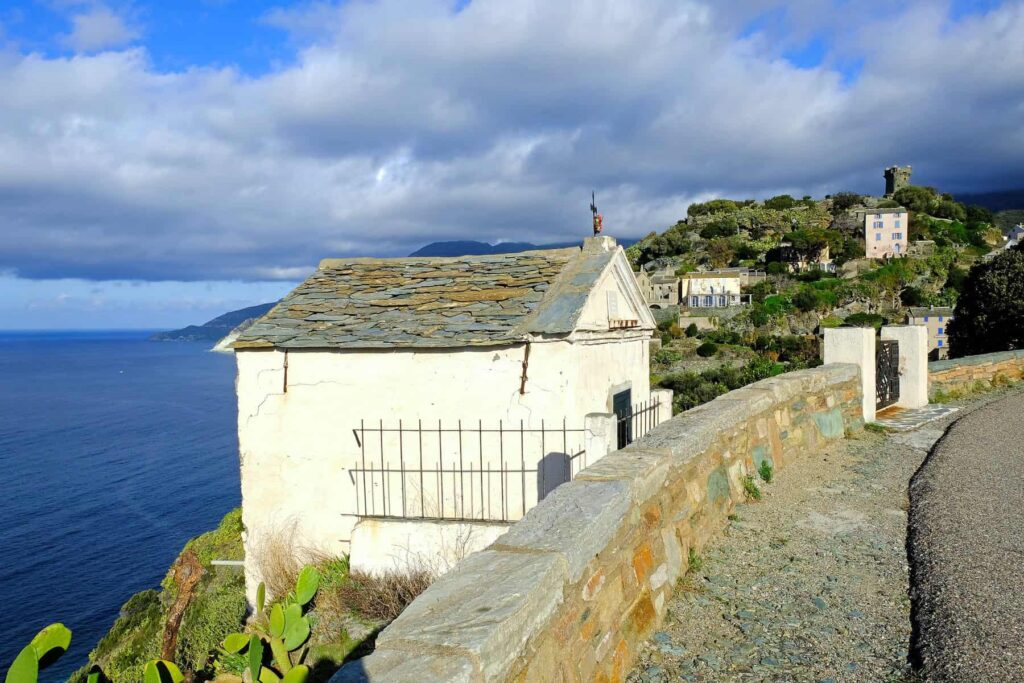
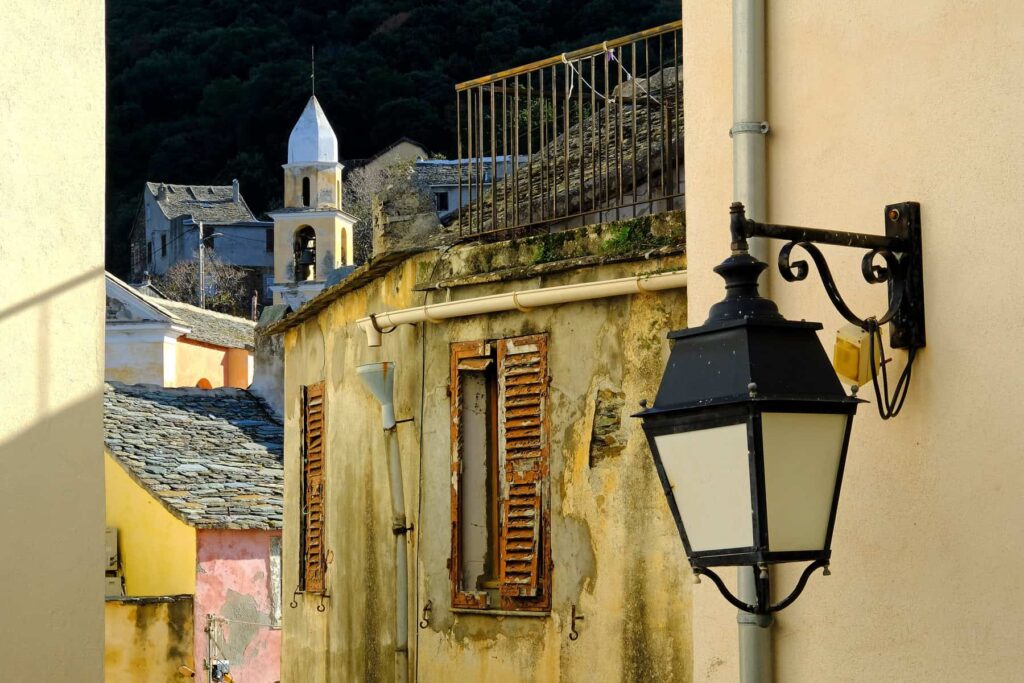
When touring Cap Corse, Nonza is a must‑stop. Nestled atop a band of grey rock in the peninsula’s austere scenery, it offers some of the best coastal views on the island. Evocative legends, a fascinating history, and a handful of old monuments add to its dramatic, almost forbidding ambience that feels worlds apart from the idyllic corners of southern Corsica.
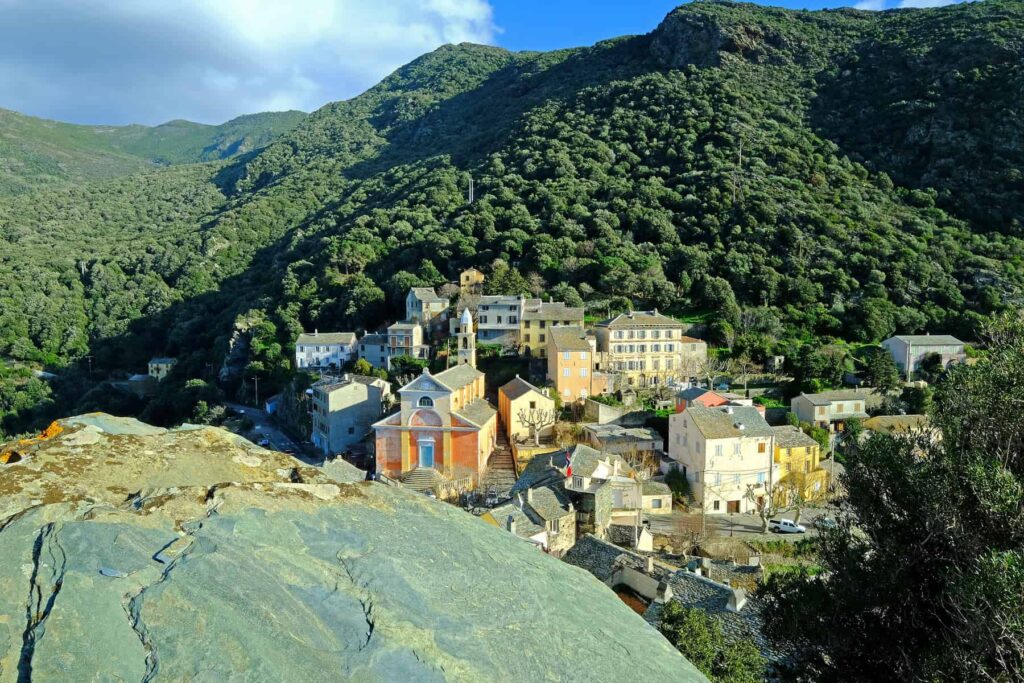
The village centres on a Plane‑shaded central square, where you can relax on a terrace of Café de la Tour, enjoy a snack or an ice cream, or sip a cool drink. Adjacent stands the bright‑coloured 16th‑century church of Sainte‑Julie, dedicated to the young Christian martyr who chose death over participating in pagan rites. Rocky steps descending from the village lead to Fontaine Sainte‑Julie, a miraculous spring protected by a small chapel that welcomes pilgrims.
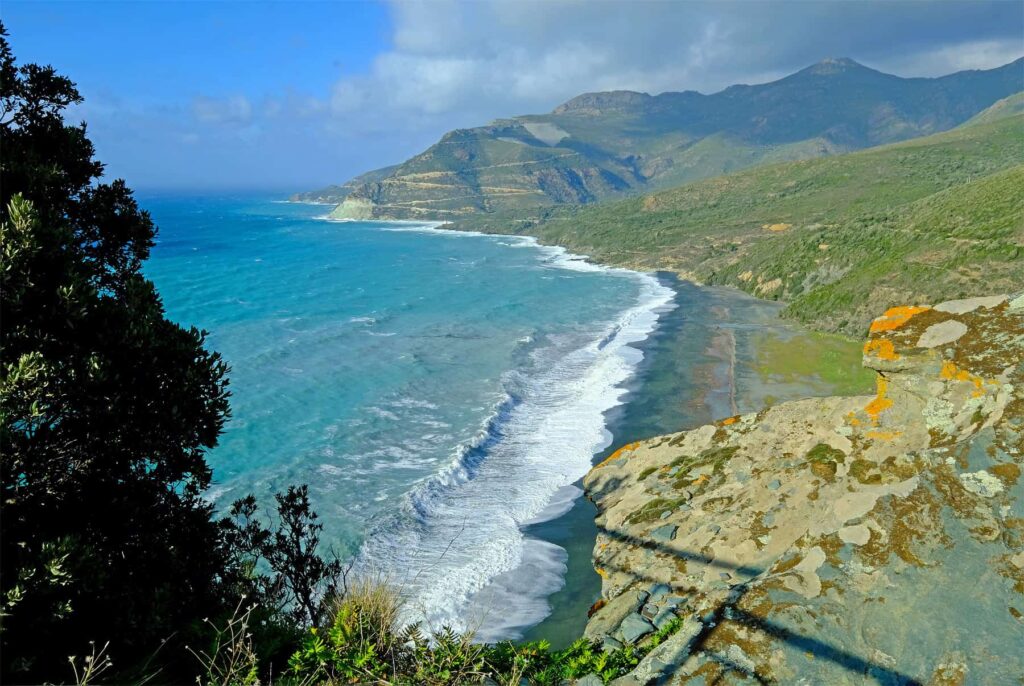
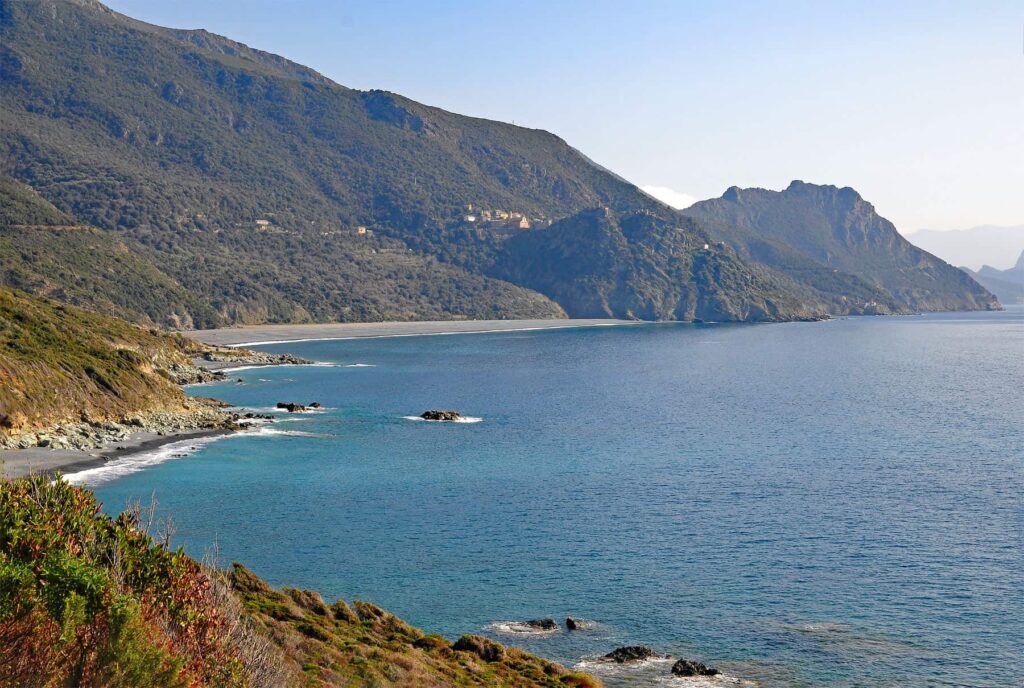
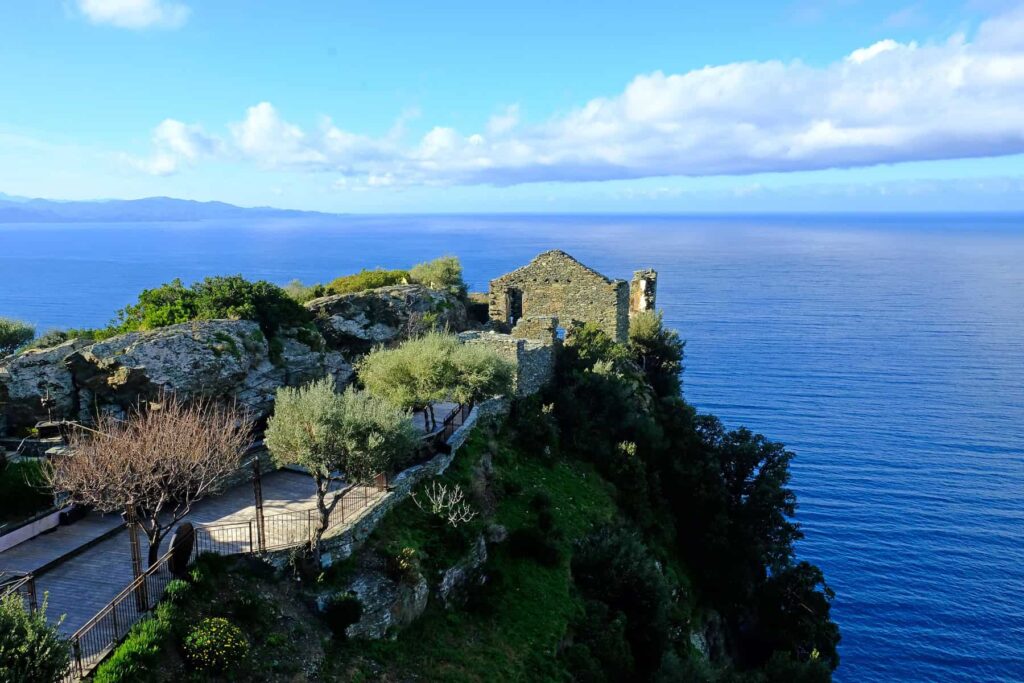
Below, an immense 1.4 km‑long ‘black’ beach of grey and green pebbles stretches along the shore, lapped by pristine waters of the Mediterranean. This awe‑inspiring site is best appreciated from an 18th‑century square watchtower with sweeping panoramas of Cap Corse and Saint Florent Bay. You can get there via a narrow staircase branching up from the square. Above, the ruins of an 11th‑century castle still crown the exposed rocky ridge- a reminder that Nonza once served as a stronghold of the da Gentile family.
BLACK BEACH
The famous black beach of Nonza, known for its moody atmosphere and wild surroundings, is one of the most photographed spots in Corsica. The shoreline is unlike a classic Mediterranean beach, with its dark pebbles creating a striking contrast against the deep blue sea. Behind, steep cliffs crowned by the picture‑perfect village plunge vertically into the water.
You can reach the beach by a steep rocky staircase descending from the village, or by driving along the coastal D80 to the bay’s northern tip. Here, a zigzagging lane runs to a small parking area with paths leading to the shore. Be careful and abstain from swimming on windy days, as waves can rise high and crash violently against the rocks. Comfortable footwear will make it easier to walk along the beach’s pebbly waterfront.
BOOK A BOAT TOUR OF CAP CORSE AND THE AGRIATES
Explore stunning corners of the northern coast on a popular boat tour of Cap Corse and the Agriates. This 6-hour sea adventure includes lunch, and swimming stops at the most enchanting locations such as Nonza, Lotu and Saleccia beaches. Paddleboards and snorkelling equipment are provided. Departure from the Saint Florent port.
NONZA CHURCH
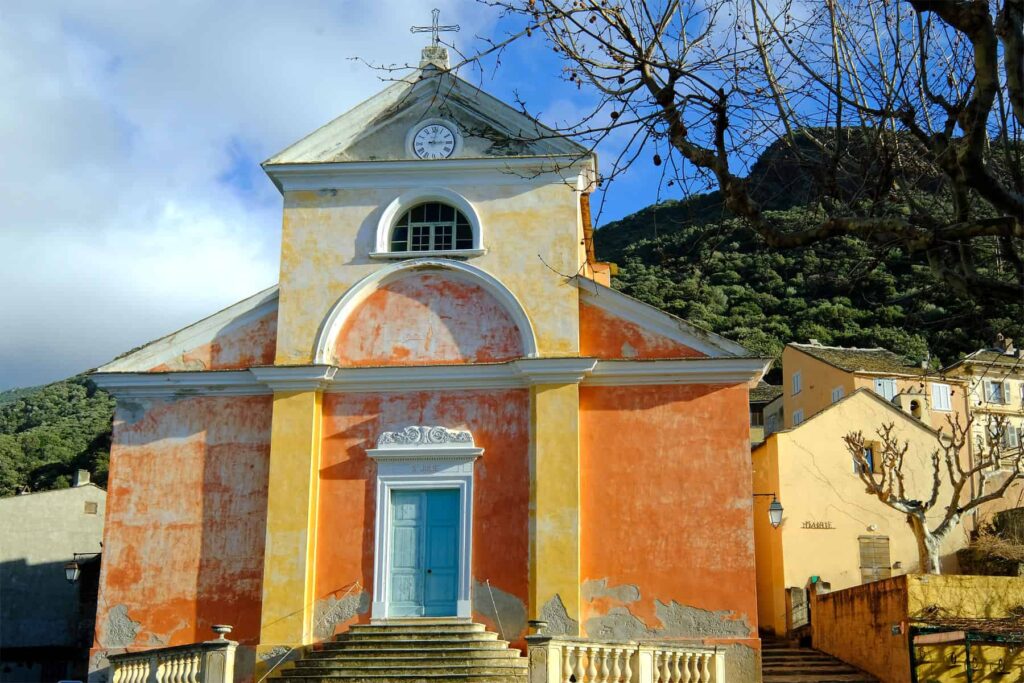
Erected in the 16th century, Nonza’s church stands at the heart of the village, anchored above the dramatic cliffs that frame the vast bay. A modest yet striking Baroque-style building, it was substantially redesigned in the 18th century and further remodelled in the next. Its bell tower with a pointed arch was added in 1893. Like many Corsican churches of the time, it served as a central place of worship for a rural community, and its simple architecture reflects local materials and Genoese influences.
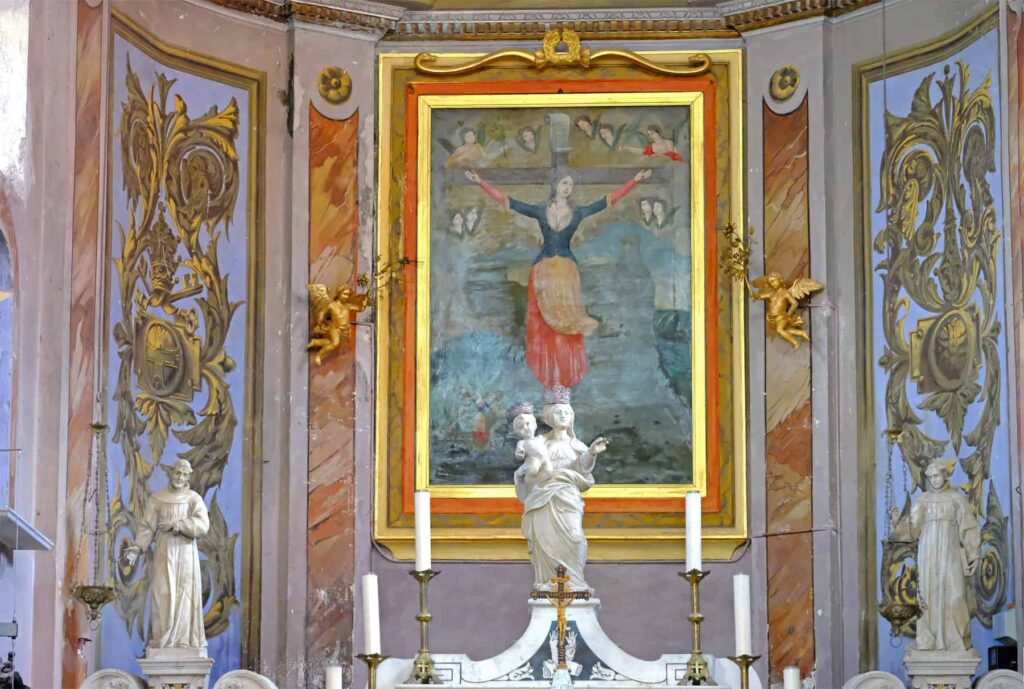
The main pink and ochre façade is topped by a triangular pediment, while inside you can admire a beautiful 16th-century painting depicting Saint Julia and a white marble figure of the Virgin and the Child. Don’t miss the side chapels, including the Chapel of Saint Anthony with a 17th-century tabernacle, the Chapel of Our Lady of the Rosary, or the Saint Erasmus Chapel dedicated to sailors.
THE LEGEND OF SAINT JULIE
Saint Julia is venerated as one of the island’s earliest Christian martyrs, with her cult deeply rooted not only in Nonza but across Corsica. According to tradition, she was a young Christian woman who suffered persecution during the reign of the Roman emperor Diocletian at the beginning of the 4th century. In the year 303, she was martyred in Nonza- crucified for her fidelity to the Christian faith after refusing to renounce her beliefs.
The story of Saint Julia has been preserved in both religious memory and local legend. One of the most striking elements of her martyrdom is the account of her torture- her executioners are said to have cut off her breasts and thrown them against the rocks below the village, where, two springs immediately gushed forth. Fontaine St-Julie became a sacred site that draws pilgrims year‑round. On 5 August 1809, the brave girl was formally proclaimed patron saint of Corsica, alongside Saint Devota.
BOOK A SAILING TOUR TO THE BEACHES OF THE AGRIATES
Set out on a magical sailing tour from Saint Florent to discover some of the most beautiful beaches in the Mediterranean- Fiume Santu, Lotu, and Saleccia. You will have an opportunity to snorkel in transparent waters lapping the shores of Desert des Agriates.
FONTAINE ST- JULIE
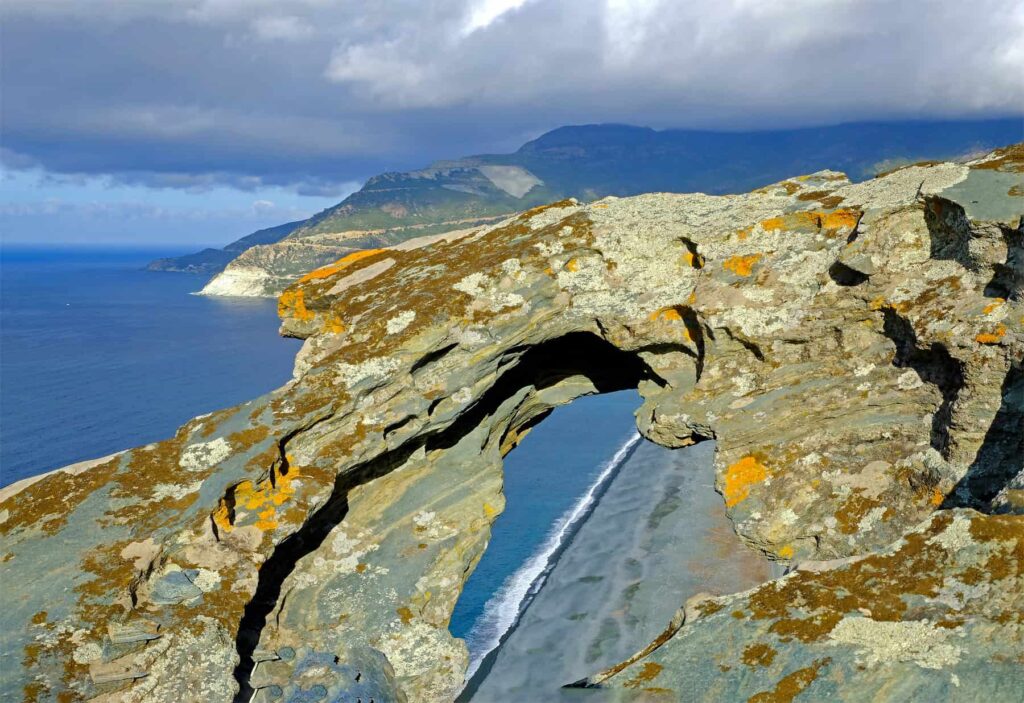
Rocky steps descend from the village to the vast Nonza beach, passing by Fontaine St‑Julie, a spring said to have sprung forth during the girl’s martyrdom. Its waters, known for their miraculous properties, are now sheltered by a small chapel. On 22 May, Corsicans celebrate their cherished patron saint in a procession that departs from the village church, chanting hymns in her honour. Saint Julia is remembered as an important spiritual figure who, through her unyielding faith, inspires the inhabitants to proudly uphold their long‑standing cultural identity.
ART IN NONZA
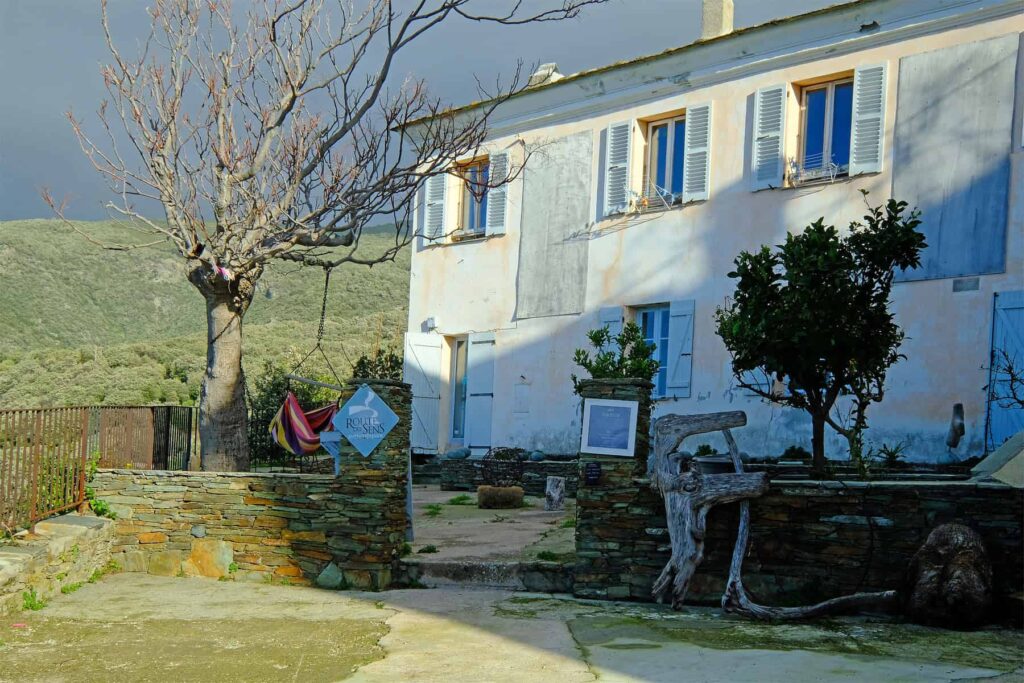
Galerie Nasce, founded in 2016 by Florence Arrighi, is a small art studio showcasing a captivating mix of sculpture, painting, photography, and drawing. Pieces are often crafted from local stone, sand, and pebbles. Each reflects the artist’s response to Cap Corse’s austere landscape, and, through natural materials, evokes its raw beauty. The gallery opens to visitors from May to October.
Another inspiring stop is Corsica Luce, a cultural association that runs events and exhibitions, bringing together artists, locals, and visitors. Here, you can discover fresh, thought‑provoking works that connect modern art with the island’s spirit.
BOOK A PARAGLIDING FLIGHT
Embark on an unforgettable aerial adventure during a tandem paragliding flight accompanied by a state-certified instructor, a magical activity great for first-timers. Fly over the Gulf of Saint Florent with panoramic views of stunning coastal scenery.
PAOLINE WATCHTOWER
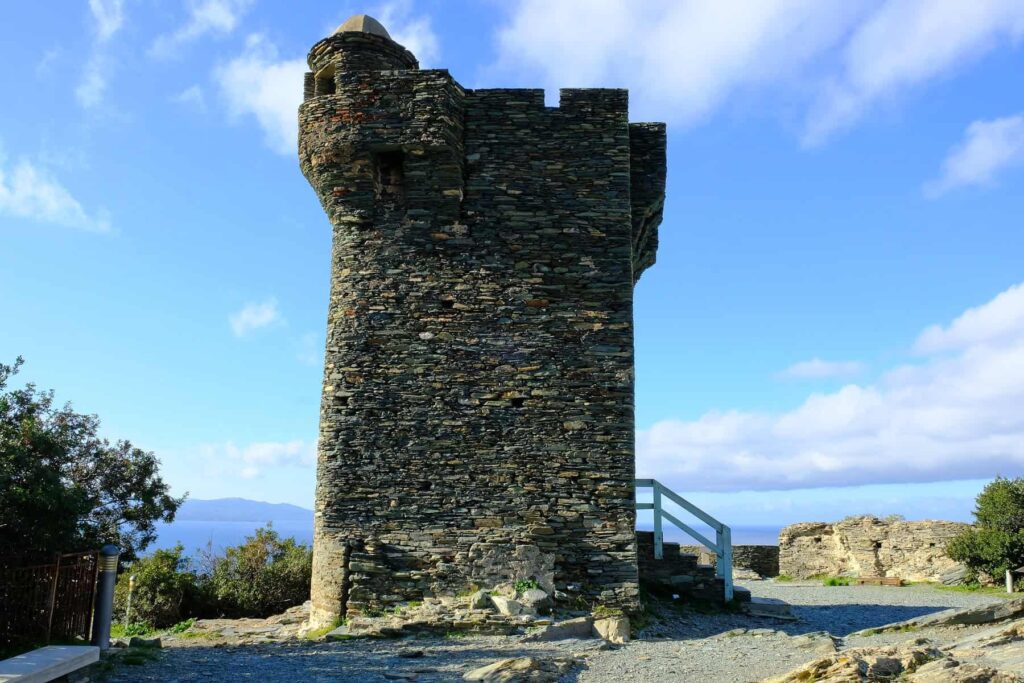
Nonza’s Paoline tower, an 18th‑century square structure perched atop the clifftop, was commissioned by Pascal Paoli to guard and monitor the surrounding coastline. From its viewing platform, you can enjoy sweeping panoramas over the village, the sea, and the long, wild stretch of Nonza Beach. Trou du Diable, a striking hole in the granite rock, beautifully frames this lunar‑like expanse of surf and pebbly shore.
The tower played a key role in the 1764 French conquest of Corsica, when Nonza became a strategic foothold for troops advancing down the peninsula. Local legend tells of Jacques Casella, a wounded Corsican commander who, from within the tower, used only a few weapons paired with clever tricks to create the illusion of a larger garrison before finally surrendering with full military honours.
LA SASSA AND DA NOI RESTAURANTS
The La Sassa restaurant is one of the finest spots in Corsica to enjoy the sunset. During the season, tables spread across a panoramic terrace that crowns the cliff. As the day fades, the venue’s music and atmospheric lighting reflected off the rocks transform the setting into an open‑air theatre with five‑star views of the blazing horizon. Top‑quality grilled meats paired with a Patrimonio red make for an excellent choice. A favourite among locals in summer, the terrace fills up quickly, so if you want a table closest to the cliff edge, it’s best to book in advance.
Restaurant Da Noi rivals La Sassa’s turbo‑dramatic setting, and while its location on the rock’s south side may be just a touch less spectacular, the food is pure pleasure. Delicious, homemade dishes crafted from fresh seasonal ingredients showcase the best of Corsican cuisine. Vegetables often come straight from the owner’s garden, the charcuterie melts in the mouth, and the wine list offers something for every taste. Food lovers will delight in both the authentic flavours and a warm, convivial atmosphere.
BOOK YOUR ACTIVITY
- WINE TASTING IN PATRIMONIO Taste delicious Corsican wines, enjoy a cellar visit and stroll in the vines. A picnic with fresh local products is included in the price.
- PRIVATE WALKING TOUR OF BASTIA Explore Bastia with a local guide on a 2-hour tour. In English or French, learn its history and visit iconic places. The journey can be customised according to your preferences.
OTHER ATTRACTIONS NEARBY
- Tour the Cap Corse peninsula, one of the island’s wildest areas, where you can easily escape the summer crowds.
- Visit Saint-Florent, a charming seaside town with a lively marina and colourful waterfront.
- Sample wines from Patrimonio, among the best in Corsica. Beyond the flagship Niellucciu and Vermentinu, don’t miss the sweet Muscat de Cap Corse.
- Take a boat trip along the Saint-Florent coastline to reach beautiful white sand beaches such as Lotu and Saleccia.
- Explore Bastia and its atmospheric old port for a glimpse into the island’s past.
- Walk the coastal trails around Saint-Florent, with scenic routes stretching out on both sides of the town.
TRAVELLER’S COMPANION FOR A TRIP TO CORSICA – GRAB YOUR EBOOK!
33 Natural Pools and Waterfalls in Corsica
Descriptions – Directions – Coordinates
YOU MAY ALSO LIKE
- Discover Desert des Agriates and its paradisiacal beaches
- 7 Amazing scenic drives in Corsica for road trip lovers
- What to see and do in Saint Florent – a chic Corsican getaway
- Top 9 Bastia beaches for a perfect day in the sun
- 11 Charming Corsican villages that will steal your heart
- Welcome to Ile Rousse – one of Corsica’s summer hot spots
- Best of Calvi – 17 unforgettable things to see and do
- 15 best beaches in Corsica for lovers of sea, sun and sand
- Best things to do in Corsica with children
- Top 11 most beautiful places in Corsica
- 15 hidden gems in Corsica – discover the island’s best-kept secrets
- Top 7 easy hikes in Corsica – outdoor adventures
- Corsica- where to go and what to do
- Best places to stay in Corsica for couples
- Where to stay in Corsica – best areas and places for your visit
PLANNING A TRIP TO CORSICA? CHECK OUT THESE RESOURCES!
Liability Disclaimer
All outdoor activities are carried out at your own risk. Always plan ahead and be cautious when preparing for your outdoor adventures. The author of this blog cannot be held responsible in the event of an accident, death, loss, personal injury, or any other inconvenience or damage that may be sustained by anyone as a result of the use of any information contained on this website.

3 comments
Hello again Karola, the comment section is Not working well! Best! Greetings. Walter Hermans
Dear Walter,
Thank you very much for reaching out and letting me know about the issue with the comment section.
I would really appreciate it if you could describe what isn’t working on your end by emailing me at contact@coolcorsica.com. I’ve tested the system and everything seems to be functioning correctly, so your feedback would be very, very helpful.
Comments are set to manual moderation, as I’ve recently been receiving a high volume of spam with inappropriate links. This means each comment needs to be approved before it appears online. If a comment is posted overnight, I usually only see and approve it the following morning.
I did receive your question on the Plateau du Cuscione article and have replied to it- it is visible under the post.
If you need any further advice or help planning your stay, feel free to reach out via email I have provided above. I’ll be more than happy to assist.
Thank you again, Walter, and have a wonderful day.
Warm regards,
Karola
Thank you lots for this article!