Just outside the port town of Saint Florent in northern Corsica is the Cathedral of Santa Maria Assunta, also known as the Cathedral of Nebbio.
Dating back to the 12th century, this beautiful example of Pisan Romanesque architecture is one of the area’s most interesting religious landmarks. Built from warm yellow limestone, it houses medieval frescoes, finely carved stonework and the relics of Saint Flor.
If you are visiting the region, find time for a short detour from the coast to explore this historic church and learn a little more about Corsica’s cultural heritage.
This page contains affiliate links meaning I may get a commission if you decide to make a purchase through my links, at no extra cost to you. Click here to learn more.
SANTA MARIA ASSUNTA CATHEDRAL AT A GLANCE
- Location – Saint Florent, North Corsica
- Dating from – 12th century
- Famous for – Pisan Romanesque architecture and medieval heritage
- Highlights – Medieval frescoes, carved stonework, relics of Saint Flor
- Opening period – mainly July and August
- Admission – A small entrance fee, free for children under 12
- Getting there – Car or a 15-minute walk from Saint Florent centre
- Recommended visit – 30-45 minutes
- Best local experience – Wine tasting tour with a cellar visit and picnic
LOCATION
Santa Maria Assunta is located just outside the charming port town of Saint Florent in northern Corsica, around a 30-minute drive from Bastia. From Place des Portes, in the town centre, the cathedral is about 800 metres to the east, along Route de la Cathédrale. From the small roundabout, continue straight until you reach the church on your left. Drive slowly, as this road can be busy and is frequently used by pedestrians.
The cathedral stands at the eastern edge of Saint Florent, where the town gradually gives way to open countryside. Beyond it are the idyllic landscapes of Nebbio Valley known for their gently rolling hills, vineyards and pastures, with several well-known wine estates further up the road.
BOOK WINE TASTING IN SAINT FLORENT & PATRIMONIO
Join a wine tasting tour in Saint Florent and Patrimonio. Taste delicious Corsican wines, enjoy a cellar visit and stroll in the vines. A picnic with fresh local products is included in the price.

Wine lover’s companion for a trip to Corsica – Grab your ebook!
Corsica Wine Guide – from vine to glass
✓ 9 wine regions
✓ 74 producers
✓ 125 wines
PARKING
Parking is available next to the cathedral, where there is an area of sandy ground with space for several cars. Make sure not to block the entrance, which needs to remain clear for visitors with reduced mobility. During the summer months and on days when major religious celebrations take place, spaces can fill up quickly, so it is best to arrive early.
ACCESSIBILITY
Visitors with reduced mobility and parents with pushchairs can use a low ramp leading to the entrance, avoiding the steps.
GETTING THERE ON FOOT
From the centre of Saint Florent, it takes around 15 minutes to walk to the cathedral. The road climbs gently uphill, so if you’re visiting in summer, bring some water and a hat to protect yourself from the sun.
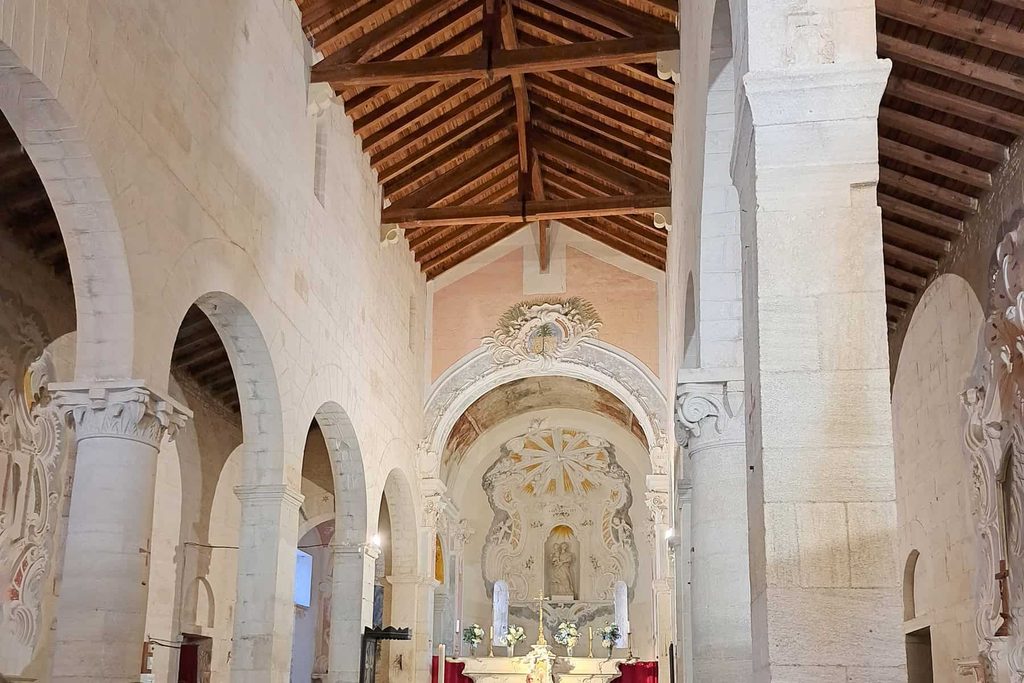
THE CATHEDRAL
The Church of Santa Maria Assunta, also known as the Cathedral of Nebbio, is an excellent example of Pisan Romanesque architecture. Dating back to the early 12th century, it was first mentioned in historical records in 1144.
The cathedral was likely built on the remains of an early Christian basilica, on or near the original site of the Roman settlement of Nebbium. Until 1789, it served as the seat of the Bishopric of Nebbio, giving it an important role in the religious history of the region.
The building was listed as a French Historical Monument in 1840 and has undergone several major restoration campaigns.
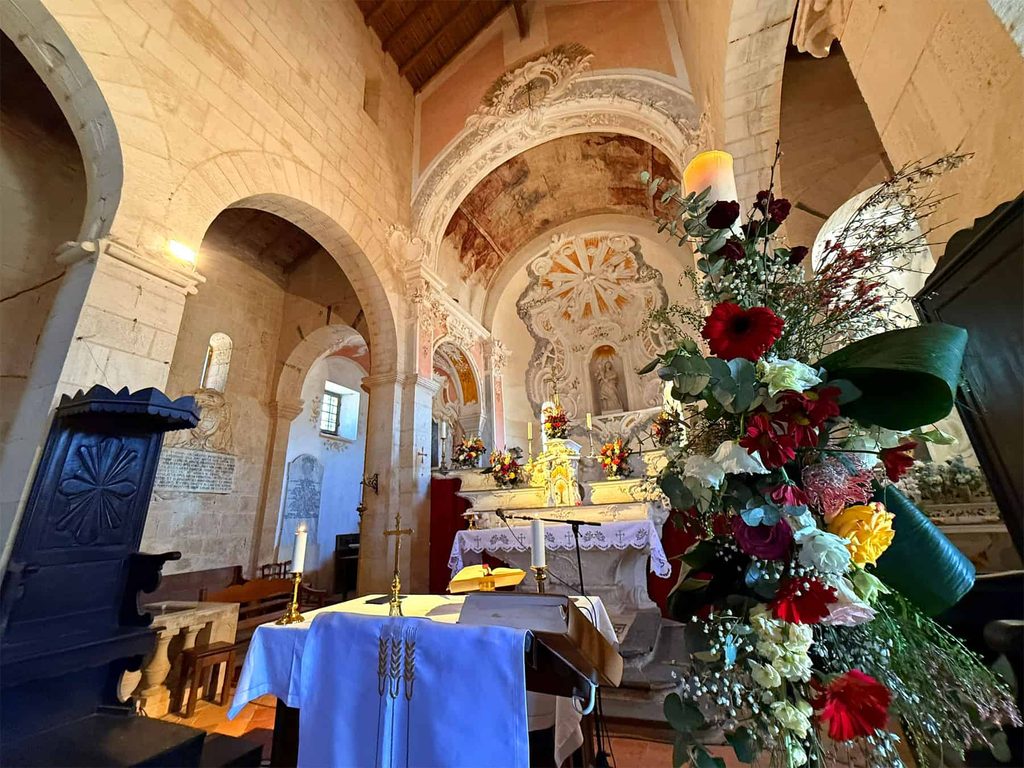
ARCHITECTURE
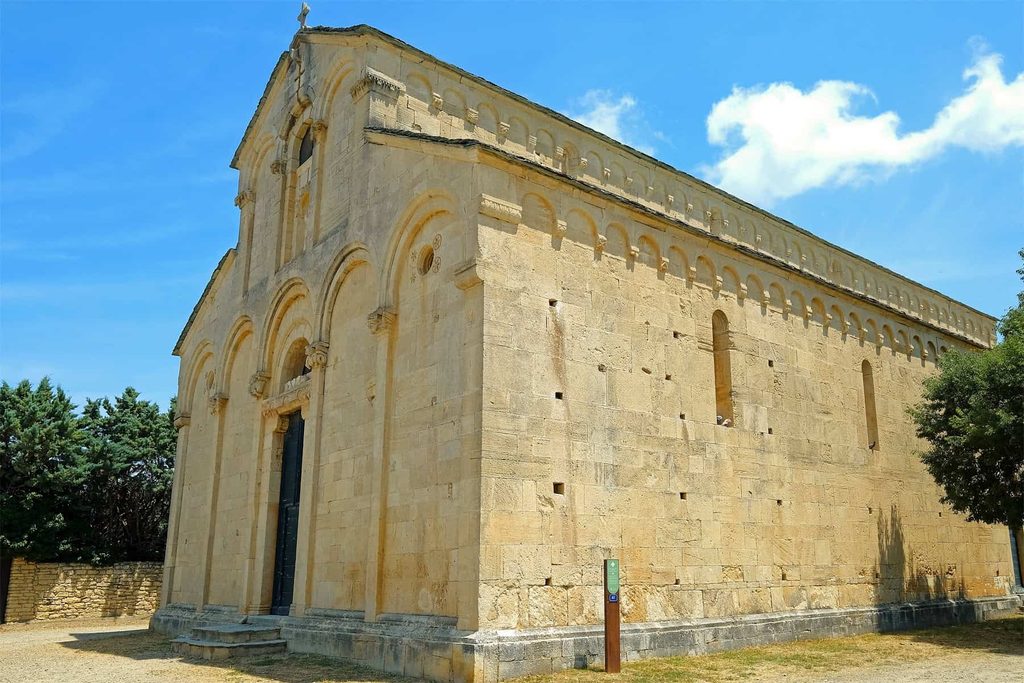
Built from warm, yellow-toned stone, the cathedral is a fine representation of its architectural period. Its simple, balanced design reflects the Romanesque style, with a sense of order and timelessness. The harmonious yet restrained elements, void of excess, give the building a contemplative atmosphere, encouraging inward reflection and quiet prayer.
The Cathedral of La Canonica in Lucciana, south of Bastia, is often considered its architectural counterpart. The two churches share similar monochromatic stonework and an almost identical floor plan.
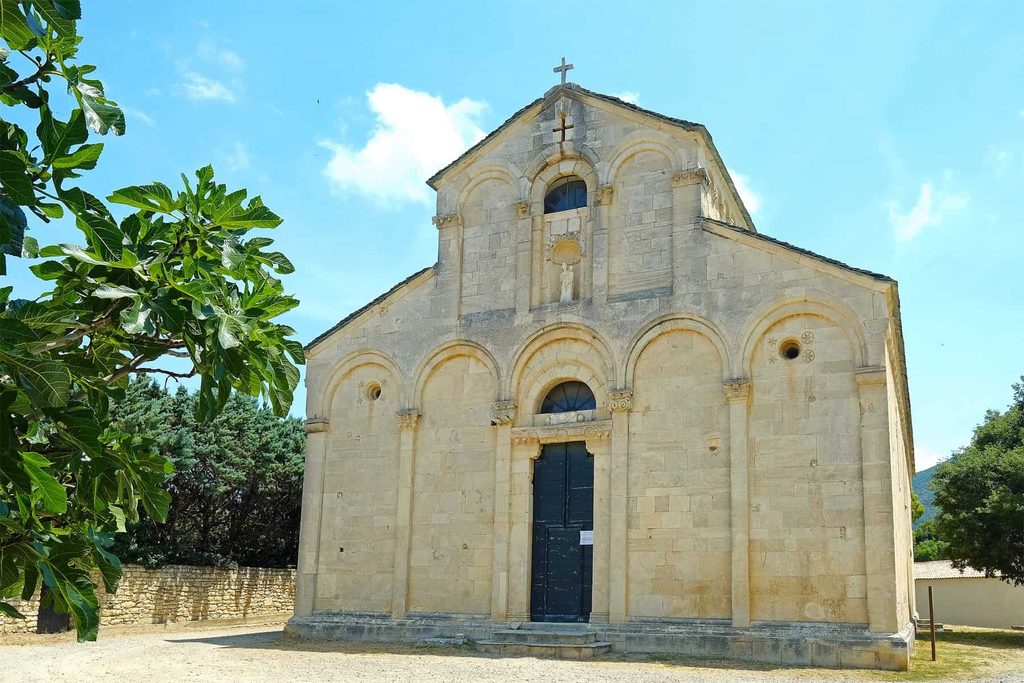
THE EXTERIOR
The cathedral is constructed from local yellow limestone, a distinctive choice in this part of Corsica, where granite dominates much of the landscape further west towards Desert des Agriates.
The main façade has an imposing, balanced appearance, with six columns supporting a series of blind arches. At its centre, a double-moulded arch frames the tympanum within the main arcade. An openwork cross crowns the top of the pediment. One notable feature missing from the exterior is the bell tower, which was knocked down in the 19th century.
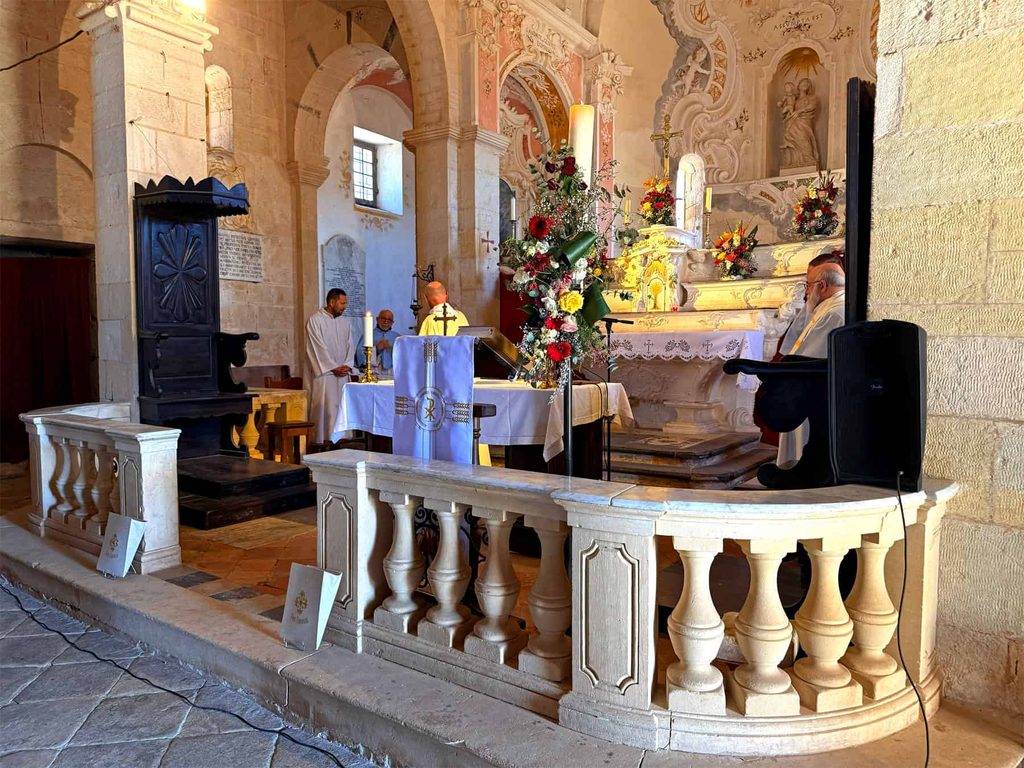
THE INTERIOR
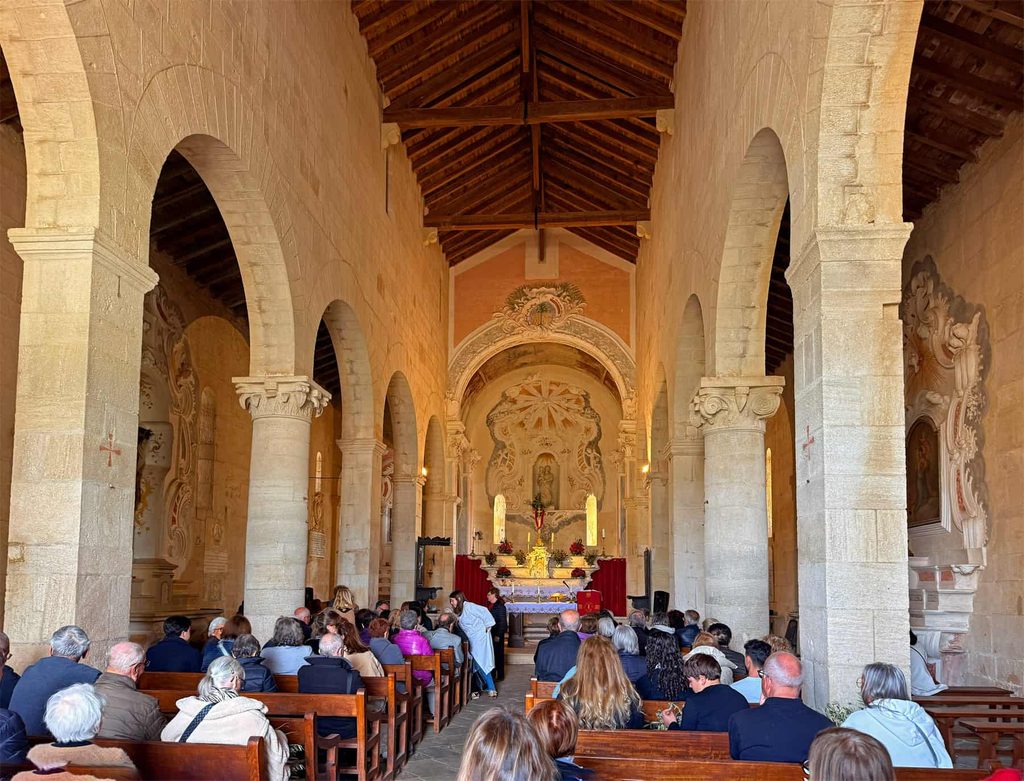
The interior is simple and elegant. A tall central nave leads towards a semicircular apse, flanked by two narrower side aisles. The stone pillars are decorated with carved animals, shells and plant motifs, displaying a remarkable level of craftsmanship. The vault retains traces of 15th-century frescoes, some of which are partially concealed by 17th-century stucco decoration. Above, the exposed timber framework supports a traditional roof covered with teghje, the flat stone slabs commonly used in Corsican roofing.
The cathedral follows a traditional east-west orientation, with the apse at the eastern end and the main entrance on the western façade. Narrow windows admit limited natural light, preserving the subdued atmosphere inside.
A (SILLY) PERSONAL NOTE – I have a particular soft spot for this church because it makes me smile as soon as I step inside. The animal carved into the first column on the right always reminds me of my beloved Staffy girl, who recently crossed the rainbow bridge after 15 wonderful years together. Yet there she is, now, immortalised on the cathedral pillar!
HIGHLIGHTS
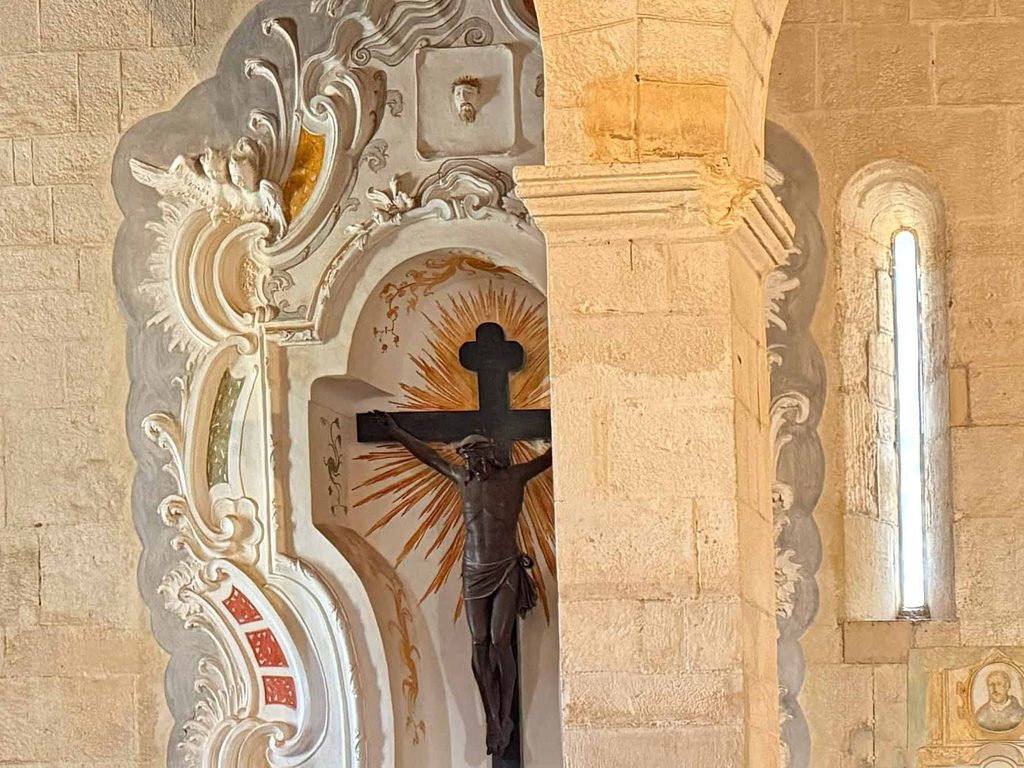
Among the notable works and historical features are a 16th-century crucifix depicting Christ on the Cross, a statue of the Virgin and Child dating from 1692, and an 18th-century funerary plaque commemorating Thomas Giustiniani, Bishop of Nebbio. The cathedral also contains the tomb of General Antoine Gentili, a Corsican military figure who supported Pasquale Paoli during the Corsican Wars of Independence.
RELICS OF SAINT FLOR
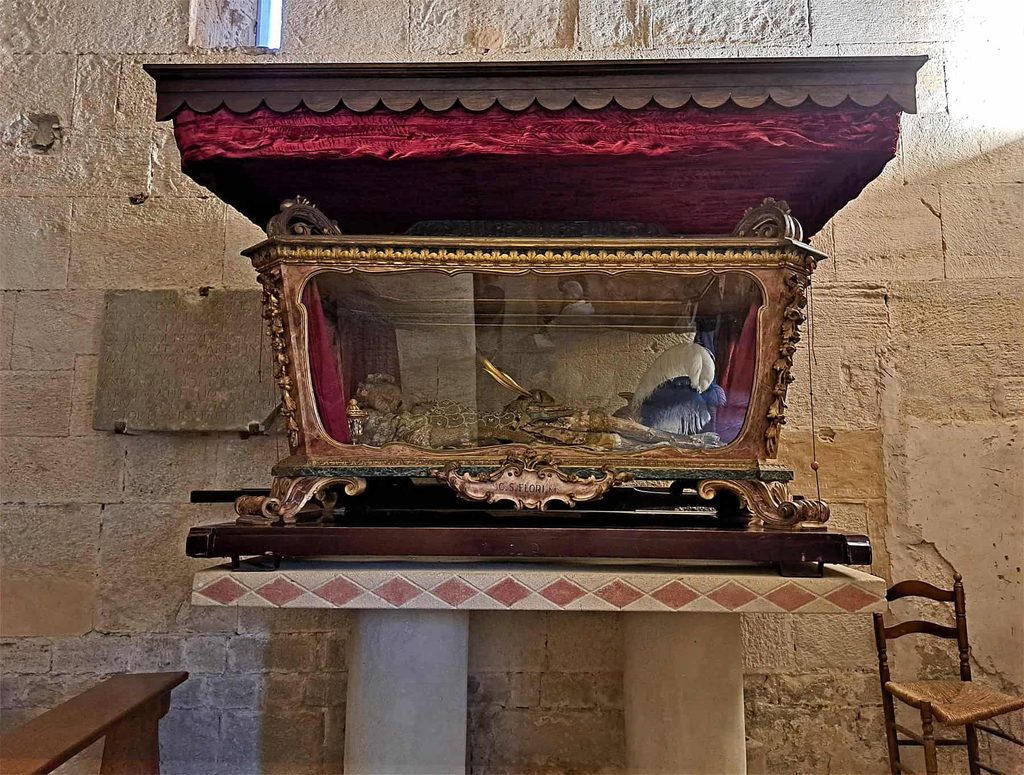
The cathedral houses the relics of Saint Flor, a Roman soldier who was martyred for his Christian faith in the 3rd century. His mummified remains are preserved in a glass reliquary, displayed on the right-hand side of the church as you enter through the main doorway. The relics were presented to the Bishop of Nebbio in 1771 by Pope Clement XIV and have remained an important part of the cathedral’s religious heritage.
WHEN TO VISIT
During the summer season, the cathedral is open to visitors from Monday to Saturday, between 9:30 am and 7:30 pm. On Sundays, tourist visits begin at 2:00 pm, as the morning is reserved for the regular Sunday service. Admission is charged at a modest fee, while children under 12 enter free of charge.
Outside the main tourist season, the cathedral is generally closed to visitors but opens for important religious celebrations, like Easter or All Saints’ Day, when services are held.
USEFUL TIP – Keep some coins handy for the entrance fee.
MASSES AND CELEBRATIONS
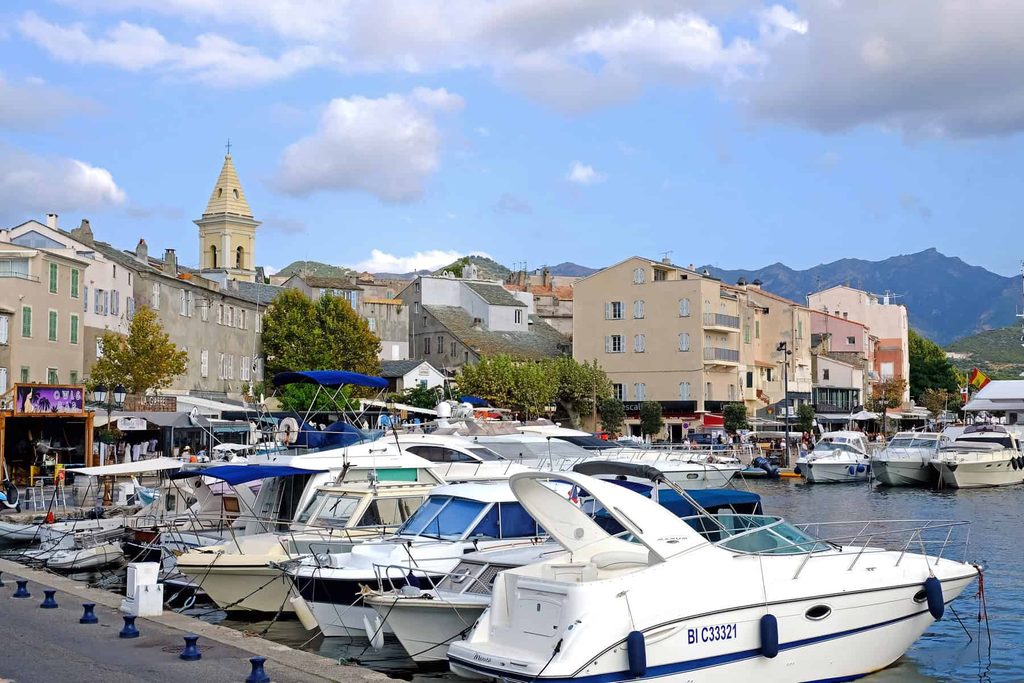
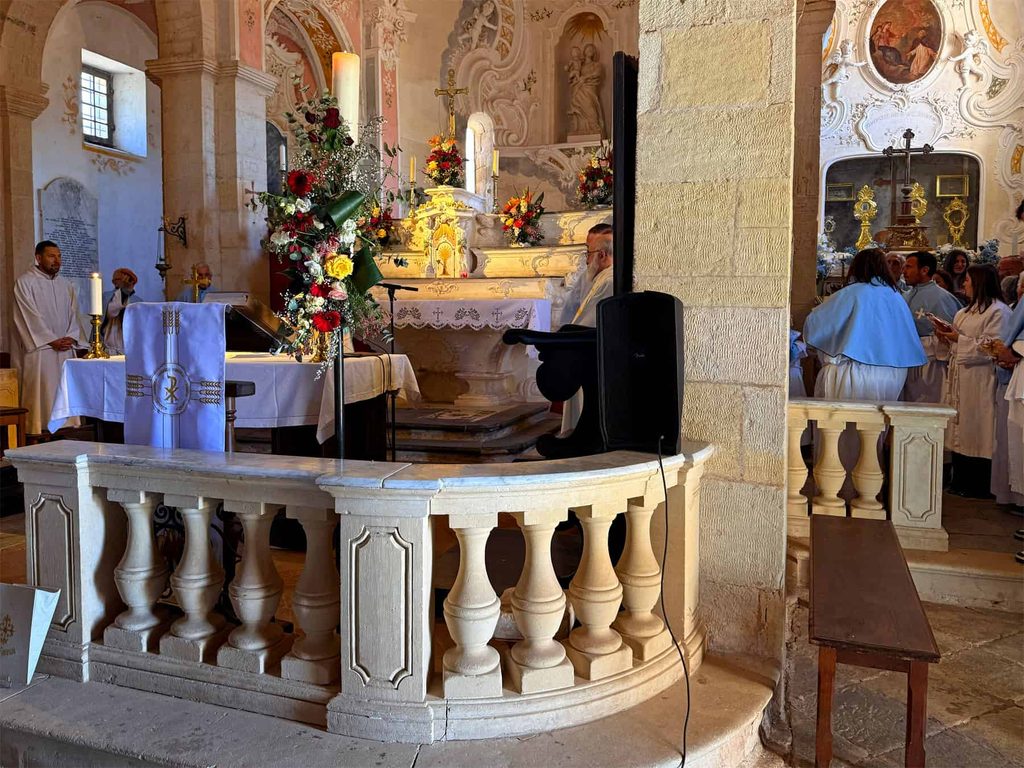
In July and August, Sunday Mass is held at the Cathedral of Santa Maria Assunta at 11:15 am. The cathedral also hosts other major Catholic celebrations throughout the year. Outside the summer months, Sunday Mass takes place at the Church of Sainte-Anne in Saint Florent, located just behind the waterfront.
For the latest Mass times and information about upcoming religious celebrations, check the official parish schedule https://www.corse.catholique.fr/le-diocese/les-paroisses-de-corse/unites-paroissiales-de-saint-florent-nonza-oletta/.
PRACTICAL TIP – With limited air circulation, the cathedral can get quite hot in summer, particularly if you wish to stay for the Mass. A small folding hand fan (available from local souvenir shops) can help you stay cool during the service.
CONCERTS
The cathedral also hosts occasional polyphonic singing concerts, offering a chance to experience the island’s unique music heritage in the atmospheric surroundings of the historic church. These powerful vocal harmonies are usually performed by three or more male voices, sometimes accompanied by traditional instruments.
But you don’t necessarily have to attend concerts to enjoy the local sounds. Corsican religious brotherhoods, known as confraternities, often perform sacred polyphony during Mass, particularly at key religious celebrations like Christmas and Easter services, patron saint feast days, Marian celebrations or the Feast of the Assumption on 15 August. One of the most moving moments comes at the conclusion of the ceremony when Diu vi Salvi Regina, the Corsican hymn, is sung to the Virgin Mary.
TRAVELLER’S COMPANION FOR A TRIP TO CORSICA – GRAB YOUR EBOOK!
33 Natural Pools and Waterfalls in Corsica
Descriptions – Directions – Coordinates
YOU MAY ALSO LIKE
- 7 Best Corsican wine & food pairings
- Celebrated wines of Patrimonio
- Iconic coastal drive around Cap Corse
- Discover Desert des Agriates and its paradisiacal beaches
- 7 Amazing scenic drives in Corsica for road trip lovers
- What to see and do in Saint Florent – a chic Corsican getaway
- Top 9 Bastia beaches for a perfect day in the sun
- 30 Summer fairs, festivals and events in Corsica
- 6 Iconic Corsican whites every wine lover should try
- Corsican Genoese towers – guardians of the island’s past
- What to eat and drink in Corsica – traditional Corsican cuisine
- Top 10 most beautiful places in Corsica – the ultimate bucket list
- 15 hidden gems in Corsica – discover the island’s best-kept secrets
- Top 7 easy hikes in Corsica – outdoor adventures
PLANNING A TRIP TO CORSICA? CHECK OUT THESE RESOURCES!